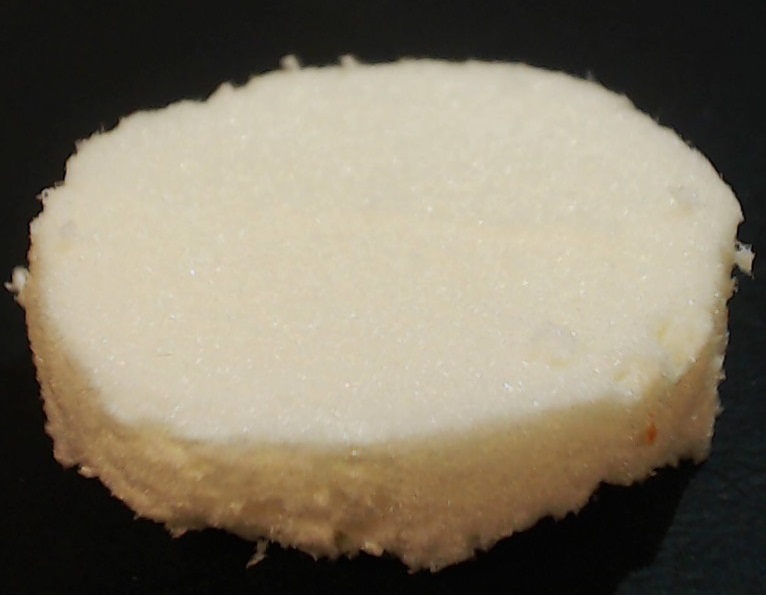
Material type: Polyurethane rigid foam (PUR) - organic foam insulation
Polymer: Polyurethane (92%)
Additives (fire retardants, fillers or traces of inorganic elements): Chlorine (7%), Phosphorus (1%), traces of
other elements (<1%)
Core thickness: 76mm
Thickness of single metal skin: 0.5mm
Table 1. Estimated mass concentration of compounds.
Compound
Mass Concentration (%)
Polyurethane (PU)
92
Chlorine (Cl)
7
Phosphorus (P)
1
Traces of potassium (K)
<1
Traces of silicon (Si)
<1
Traces of sulfur (S)
<1
Table 1. Estimated mass concentration of compounds.
Compound
Mass Concentration (%)
Polyurethane (PU)
92
Chlorine (Cl)
7
Phosphorus (P)
1
Traces of potassium (K)
<1
Traces of silicon (Si)
<1
Traces of sulfur (S)
<1
A. Material composition identification
A.1 Attenuated total reflection – Fourier transform infrared spectroscopy (ATR-FTIR)
Table 2. FTIR compound identification.
Identified Compounds
Polyurethane (PU)
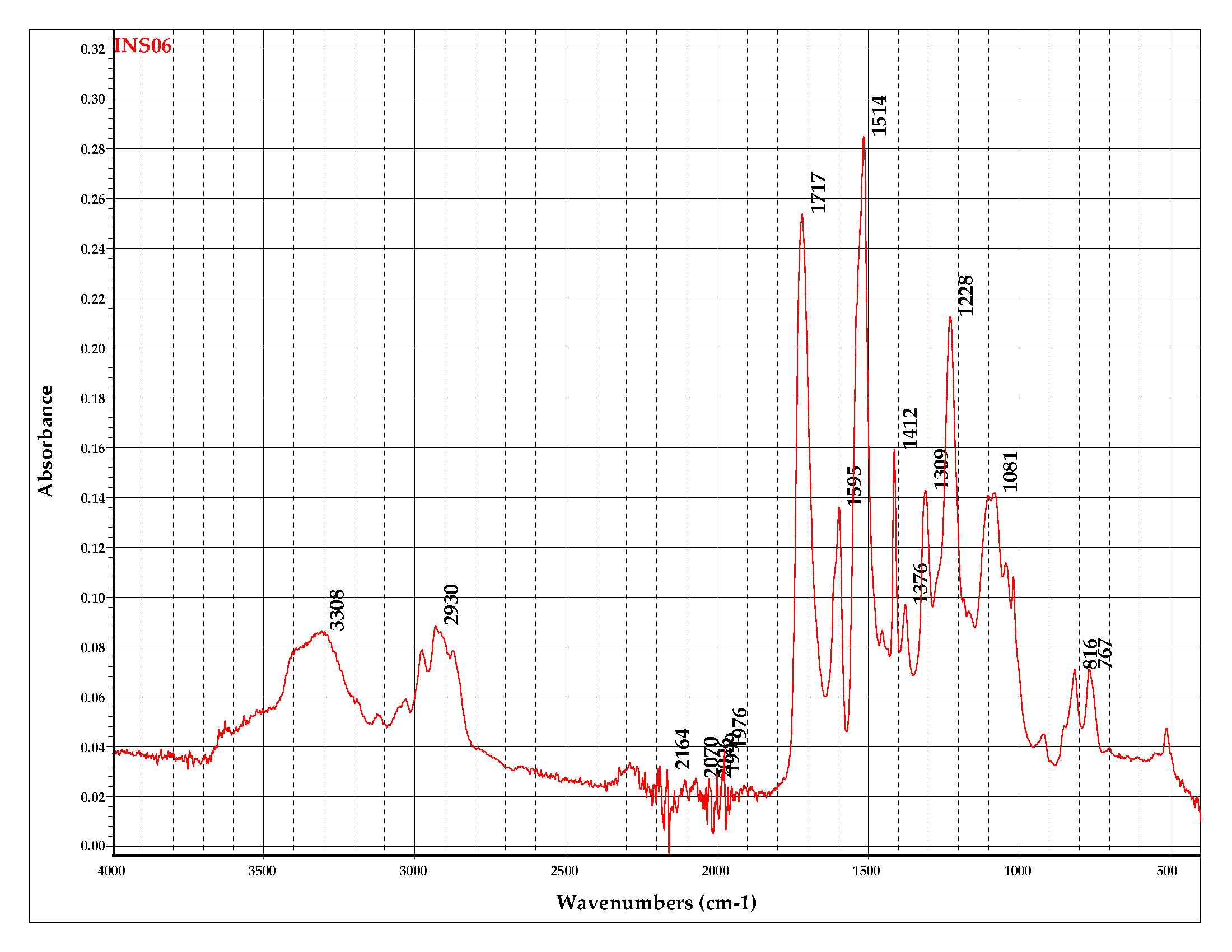
Figure 1 . FTIR spectra: Absorbance percentage versus wavenumber from the sample.
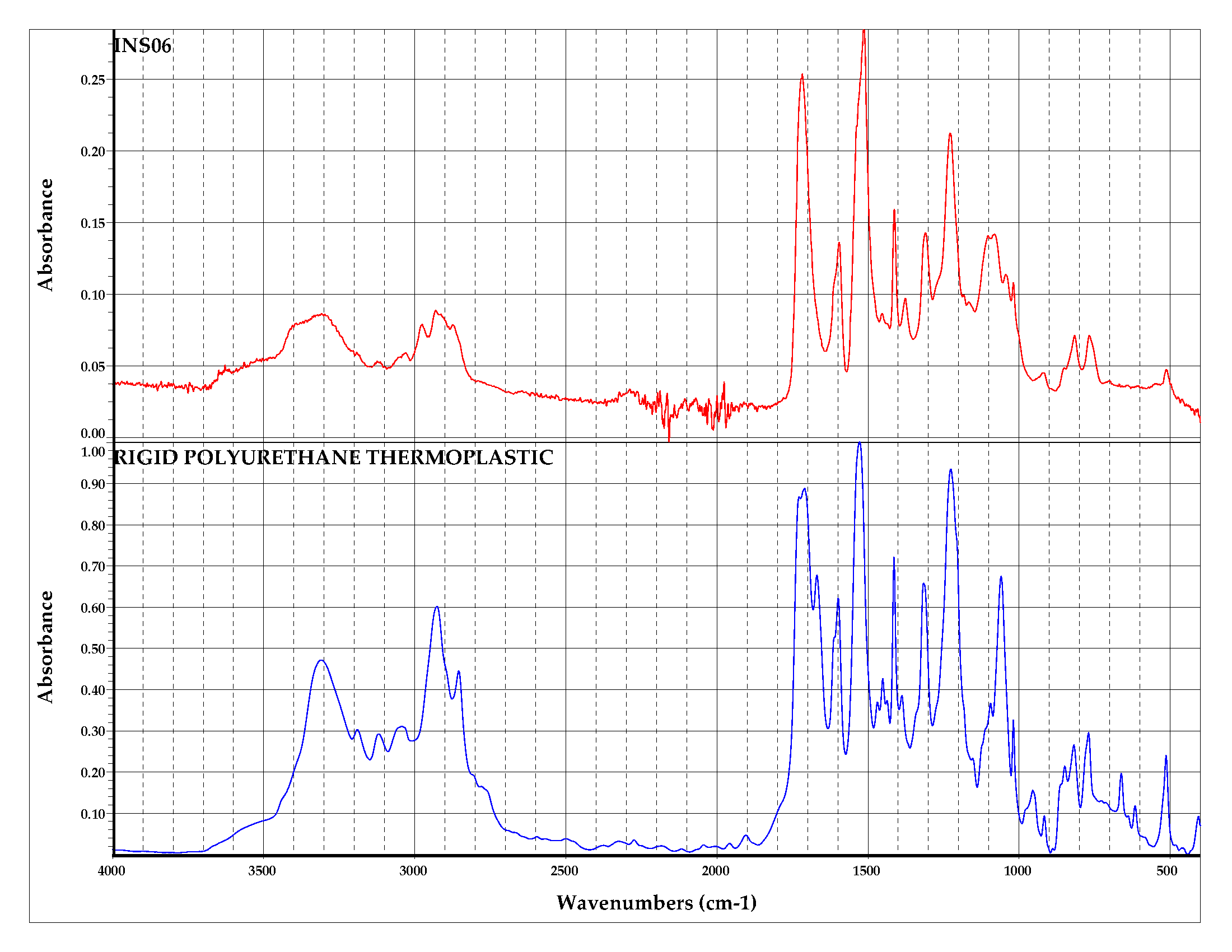
Figure 2. FTIR spectra: Absorbance percentage versus wavenumber from the sample and the identified compounds.
A.2 Energy Dispersive X-Ray Fluorescence (EDXRF)
Table 2. Inorganic elements and their mass concentration identified with EDXRF.
Element
Mass Concentration (%)
Cl
7
P
1
K
<1
Si
<1
S
<1
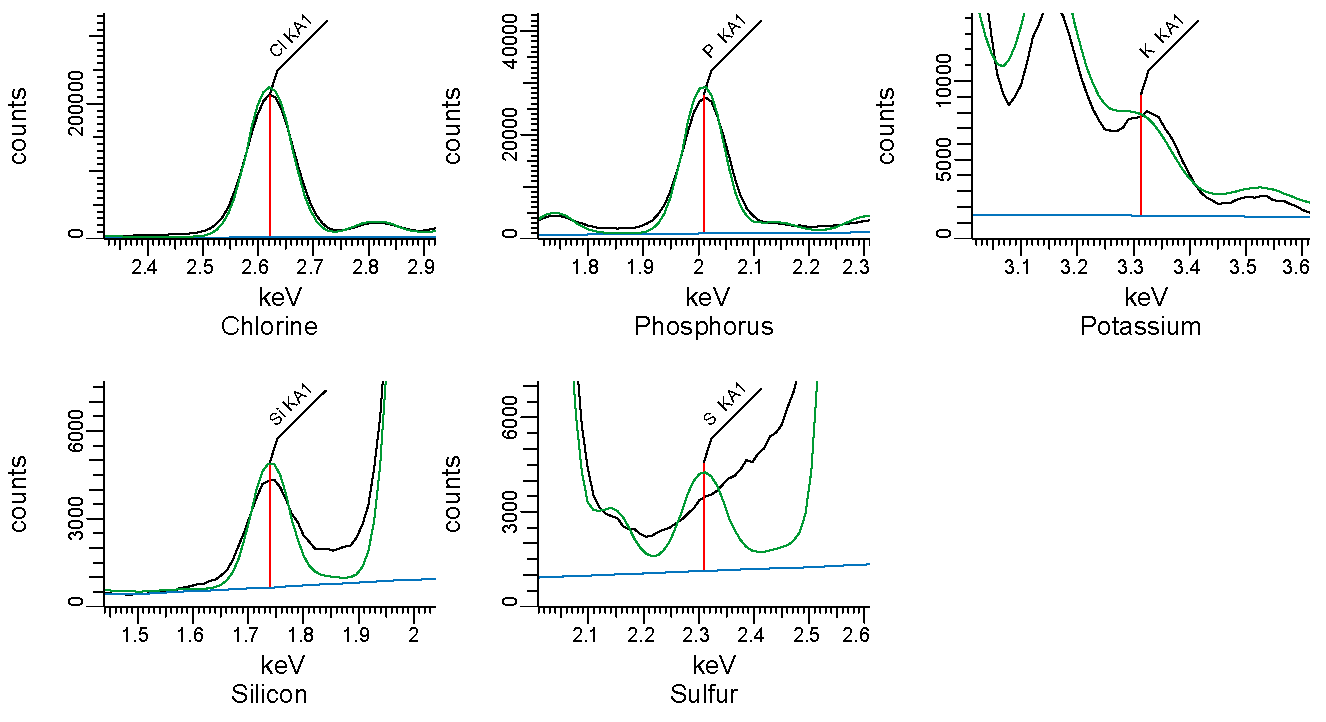
Figure 3. EDXRF spectra. Counts vs energy. Identified elements are shown as vertical lines.
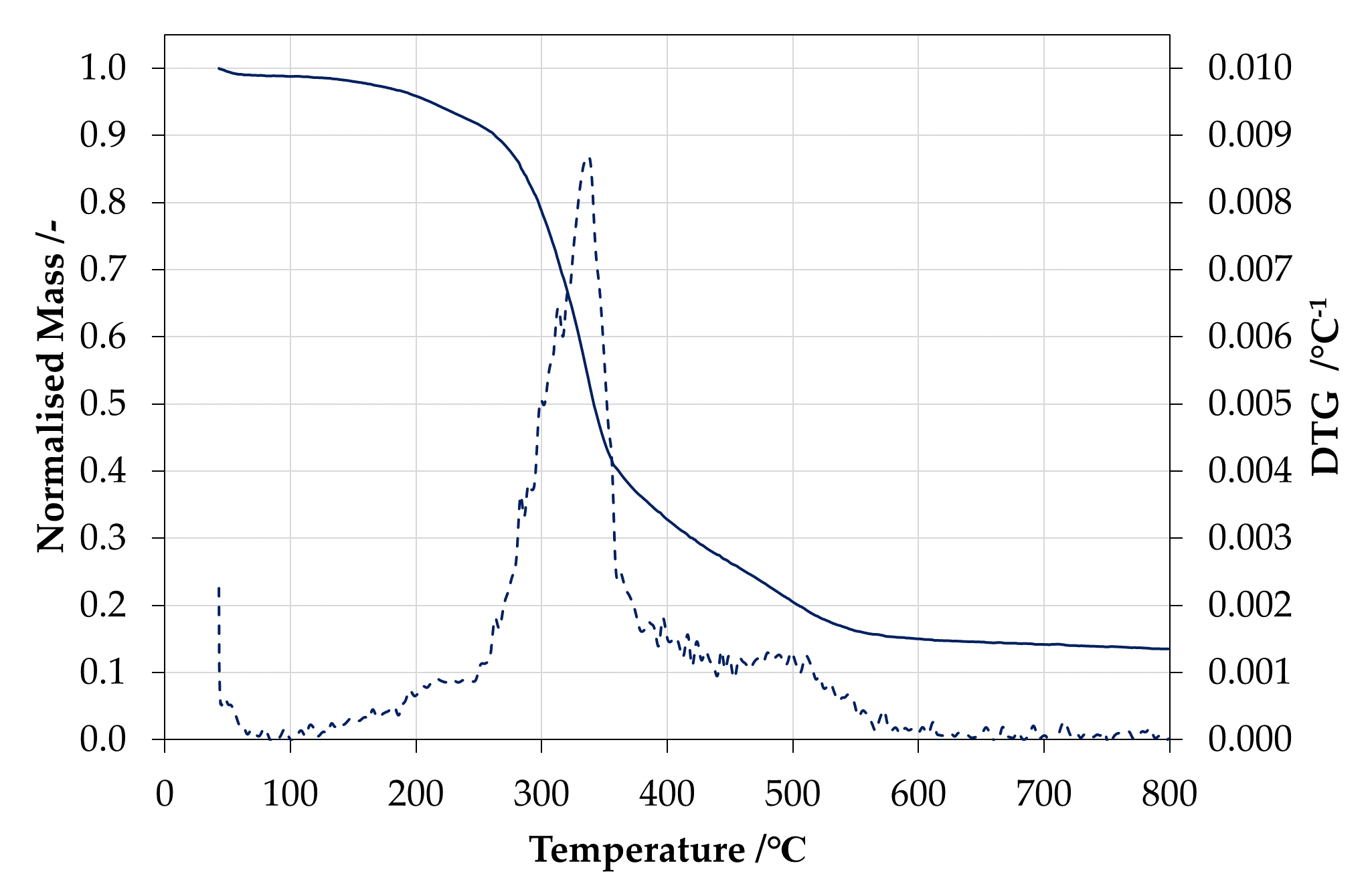
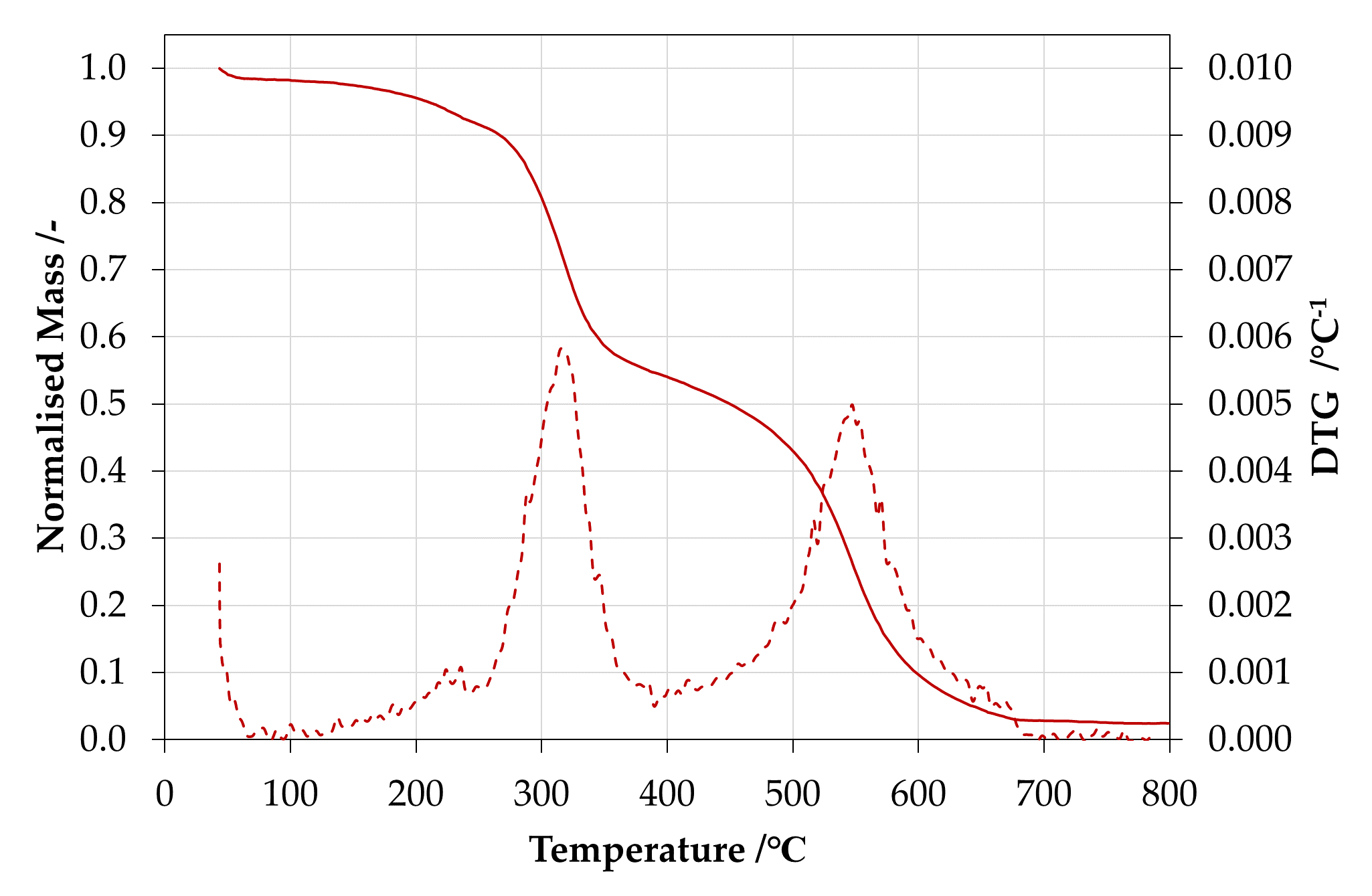
B. Thermogravimetric analysis
Table 3. Mass fraction of residue after thermal decomposition.
Condition
Fraction of mass residue at 800°C
Non-oxidative (nitrogen)
0.14
Oxidative (air)
0.02
Table 4. Temperature and amplitude of main peaks in non-oxidative conditions.
Peak ID
Temperature peak (°C)
Amplitude of peak (°C-1)
Peak 1
217
9 x 10⁻⁴
Peak 2
337
8.69 x 10⁻³
Peak 3
499
1.3 x 10⁻³
Table 5. Temperature and amplitude of main peaks in oxidative conditions.
Peak ID
Temperature peak (°C)
Amplitude of peak (°C-1)
Peak 1
236
1.08 x 10⁻³
Peak 2
316
5.82 x 10⁻³
Peak 3
547
4.99 x 10⁻³
Figure 4. Normalised mass (solid line) and derivative of the normalised mass (dashed line) in 150 ml min-1 of nitrogen and a heating rate of 20°C min-1.Figure 5. Normalised mass (solid line) and derivative of the normalised mass (dashed line) in 150 ml min-1 of air and a heating rate of 20°C min-1 .
C. Gross Heat of Combustion
Table 7. Gross Heat of Combustion individual results for sample.
Trial
ΔHc [kJ g-1]
Trial 1
28.90
Trial 2
29.20
Trial 3
28.75
Average
28.95
Std dev
0.23
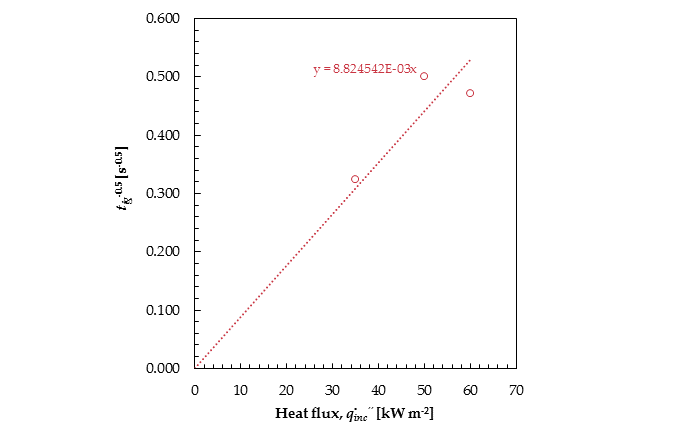
D. Ignition parameters
Table 8. Summary of ignition parameters for sample.
Critical heat flux for ignition
Ignition temperature
Total heat transfer coefficient of losses
Apparent thermal inertia
q̇″cr [kW m−2]
Tig [°C]
hr [W m-2 K-1]
kρc [kW2 m-4 K-2 s]
17.30
399
41.10
0.092
Figure 6. Time-to-ignition vs incident radiant heat flux for samples.
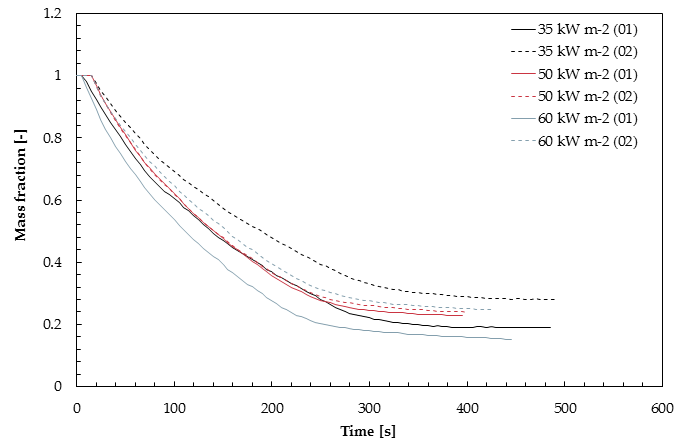
E. Burning behaviour
Table 9. Summary of key burning behaviour metrics.
Heat flux
Test
Time to ignition
Fraction of mass residue
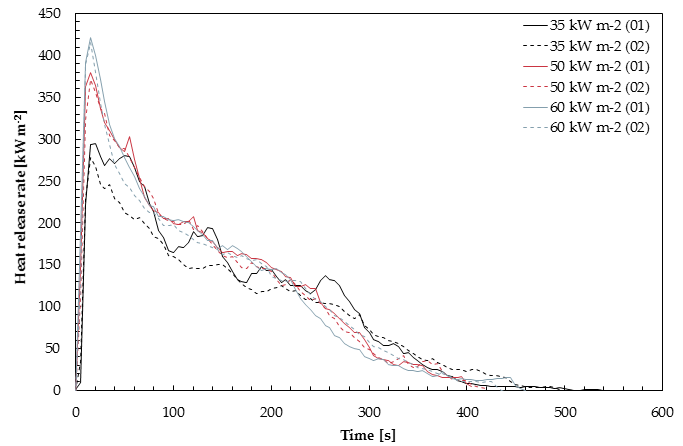
Peak heat release rate
Total energy released
q̇″inc [kW m-2]
tig [s]
mres [-]
q̇″p [kW m-2]
Qt [MJ m-2]
35 kW m-2
Test 1
10
0.19
295.34
54.32
Test 2
9
0.28
278
49.69
Avg
10
0.24
286.67
52
50 kW m-2
Test 1
4
0.23
380.09
57.29
Test 2
4
0.24
371.04
55.95
Avg
4
0.23
375.57
56.62
60 kW m-2
Test 1
4
0.15
421.16
56.68
Test 2
5
0.25
414.86
52.21
Avg
4
0.20
418.01
54.45
80 kW m-2
Test 1
-
-
-
-
Test 2
-
-
-
-
Avg
-
-
-
-
Figure 7. Normalised mass loss over time for samples tested with 35, 50, 60 and 80 kW m-2.Figure 8. Heat release rate per unit area over time for samples tested with 35, 50, 60 and 80 kW m-2.Table 10. Effective Heat of Combustion individual results for sample.
Test
ΔHc [kJ g-1]
35 kW m-2 (Test 1)
21.22
35 kW m-2 (Test 2)
22.13
50 kW m-2 (Test 1)
23.33
50 kW m-2 (Test 2)
23.55
60 kW m-2 (Test 1)
21.36
60 kW m-2 (Test 2)
22.08
80 kW m-2 (Test 1)
-
80 kW m-2 (Test 2)
-
Average
22.28
Std dev
0.98
F. Flame Spread
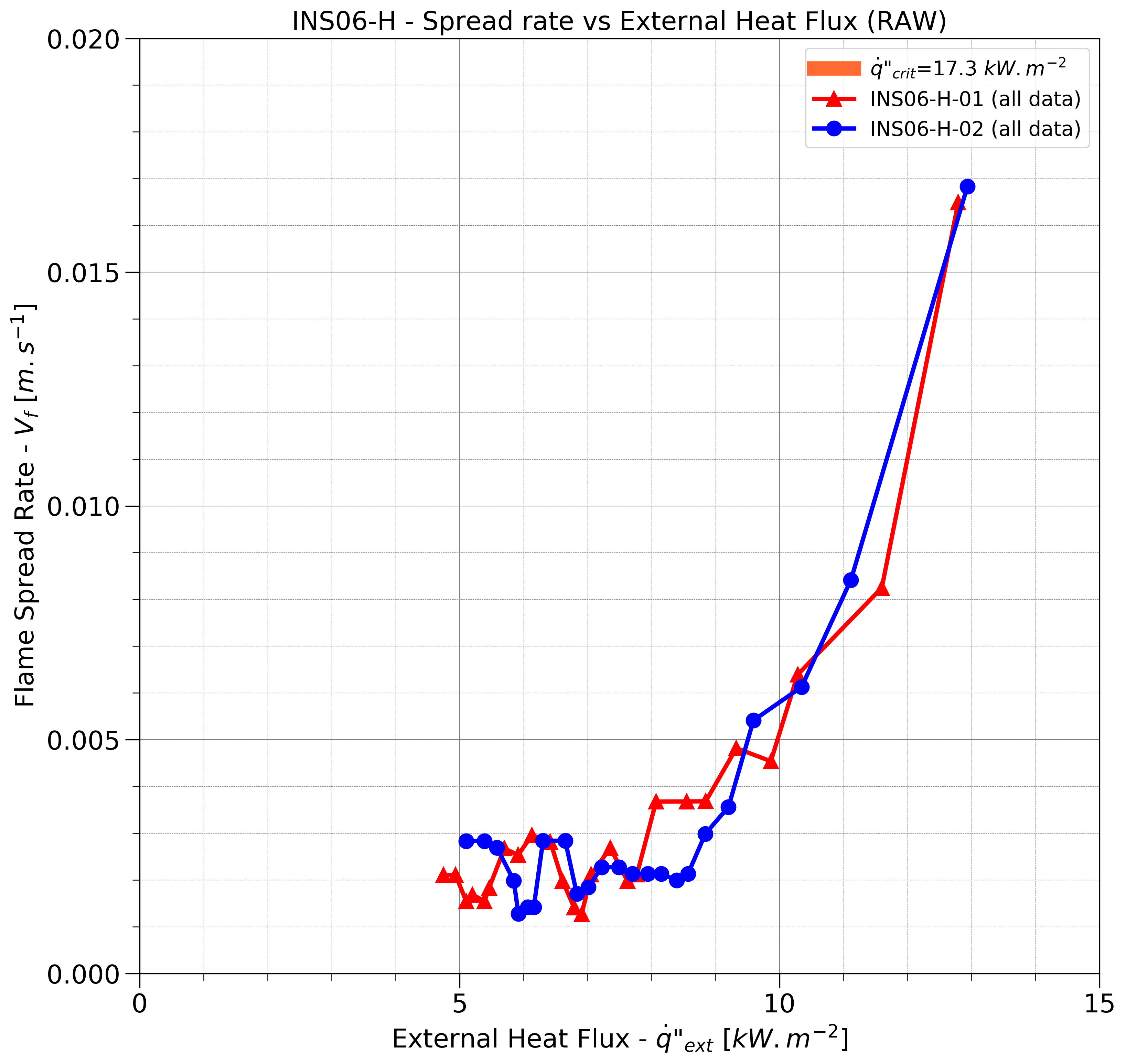
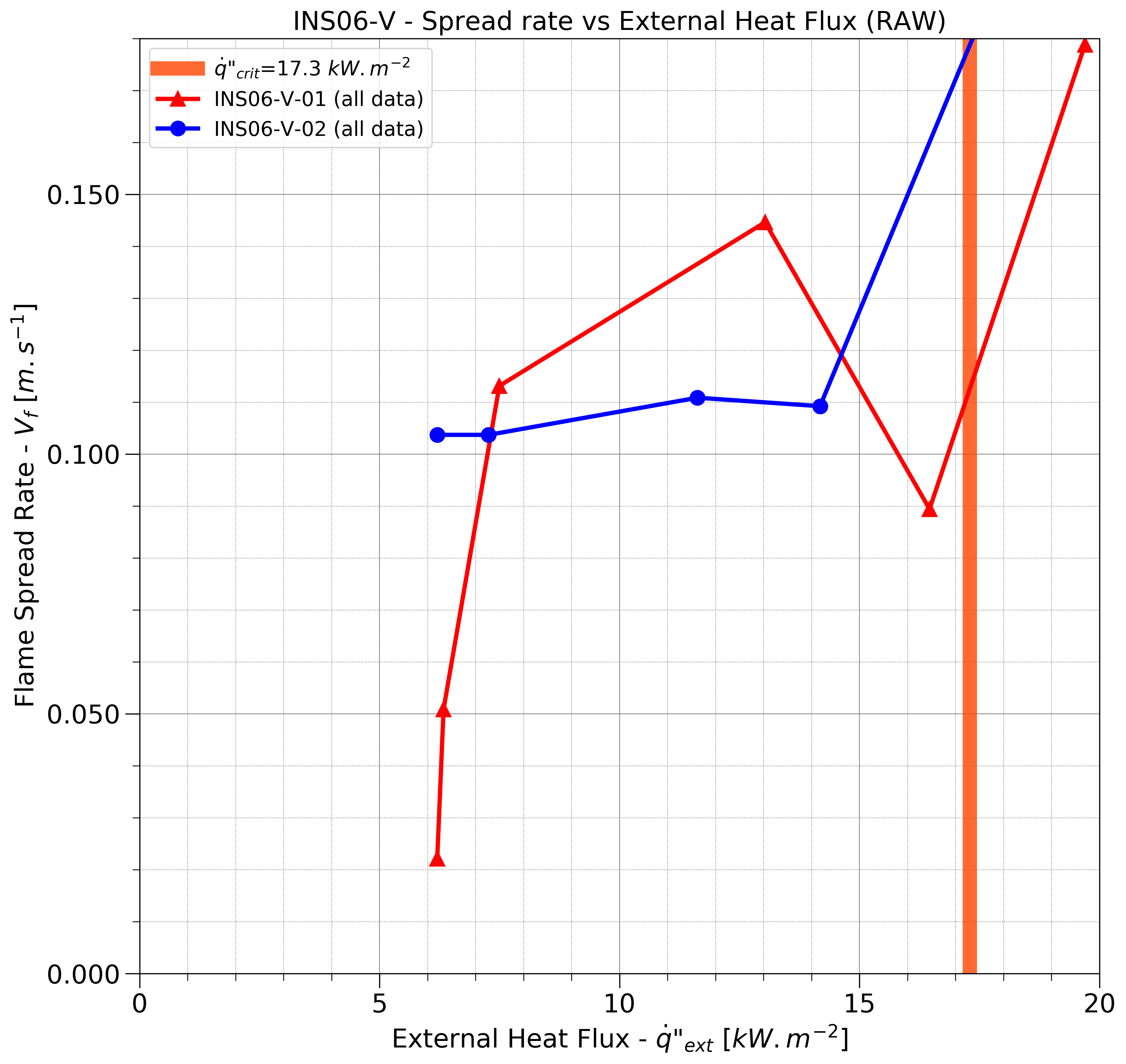
Table 11. Minimum heat flux for flame spread rate and minimum flame spread rate for sample.
Orientation
q̇″min.spread [kW m-2]
Vf.min [mm s-1]
Horizontal
5.40
2
Vertical
-
109
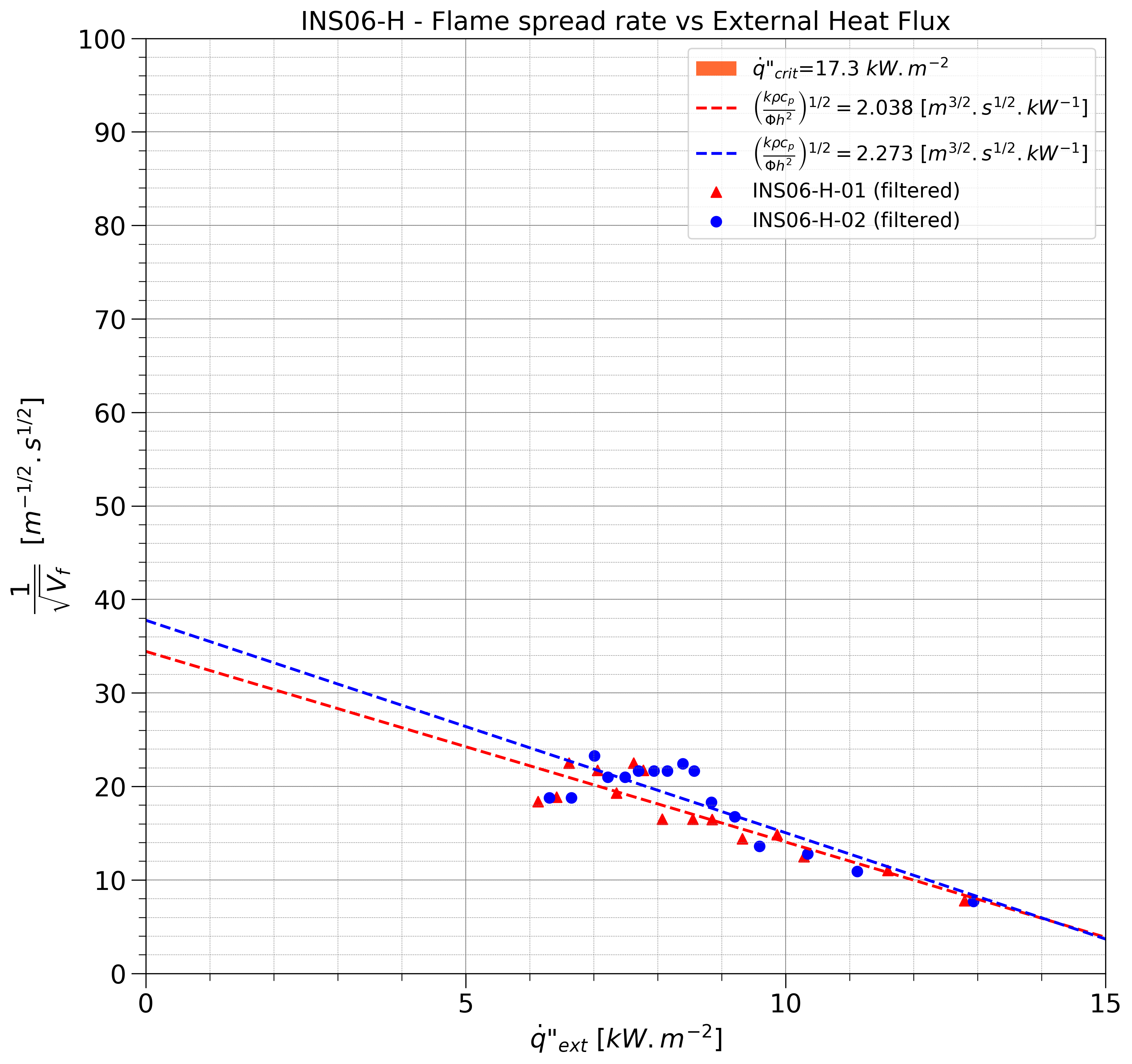
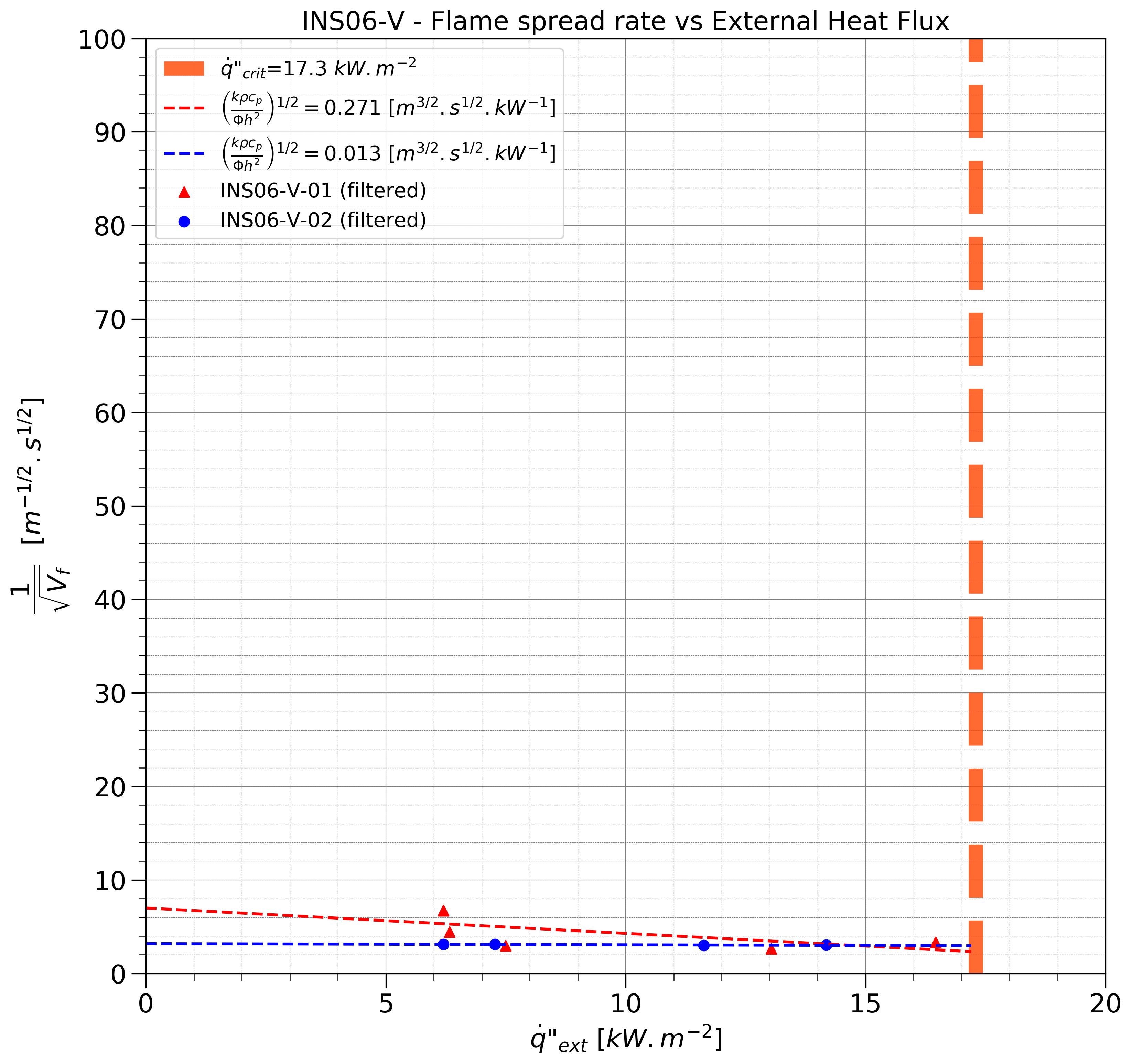
Figure 9. Lateral flame spread rate versus heat flux.Figure 10. Vertical flame spread rate versus heat flux.Figure 11. Vf-1/2 as function of q̇″ext in horizontal configuration.Figure 12. Vf-1/2 as function of q̇″ext in vertical configuration.Table 12. Flame spread parameter results for sample.