SRK14
Material description
Material ID: SRK14
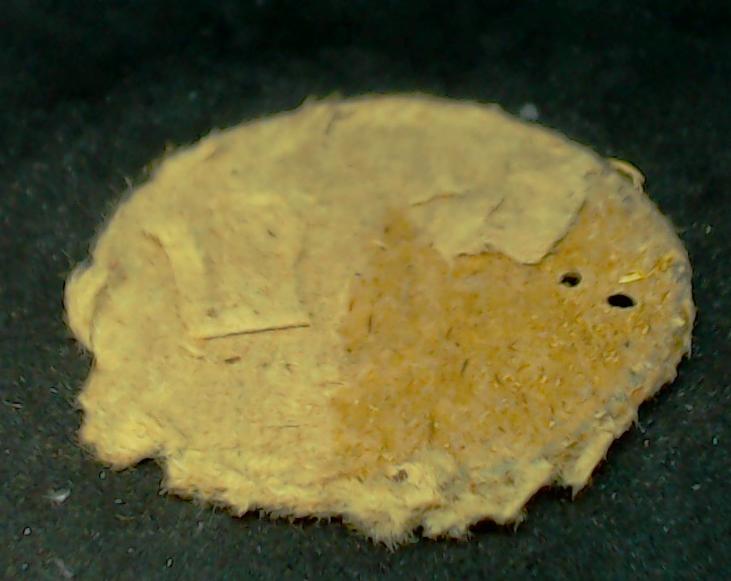
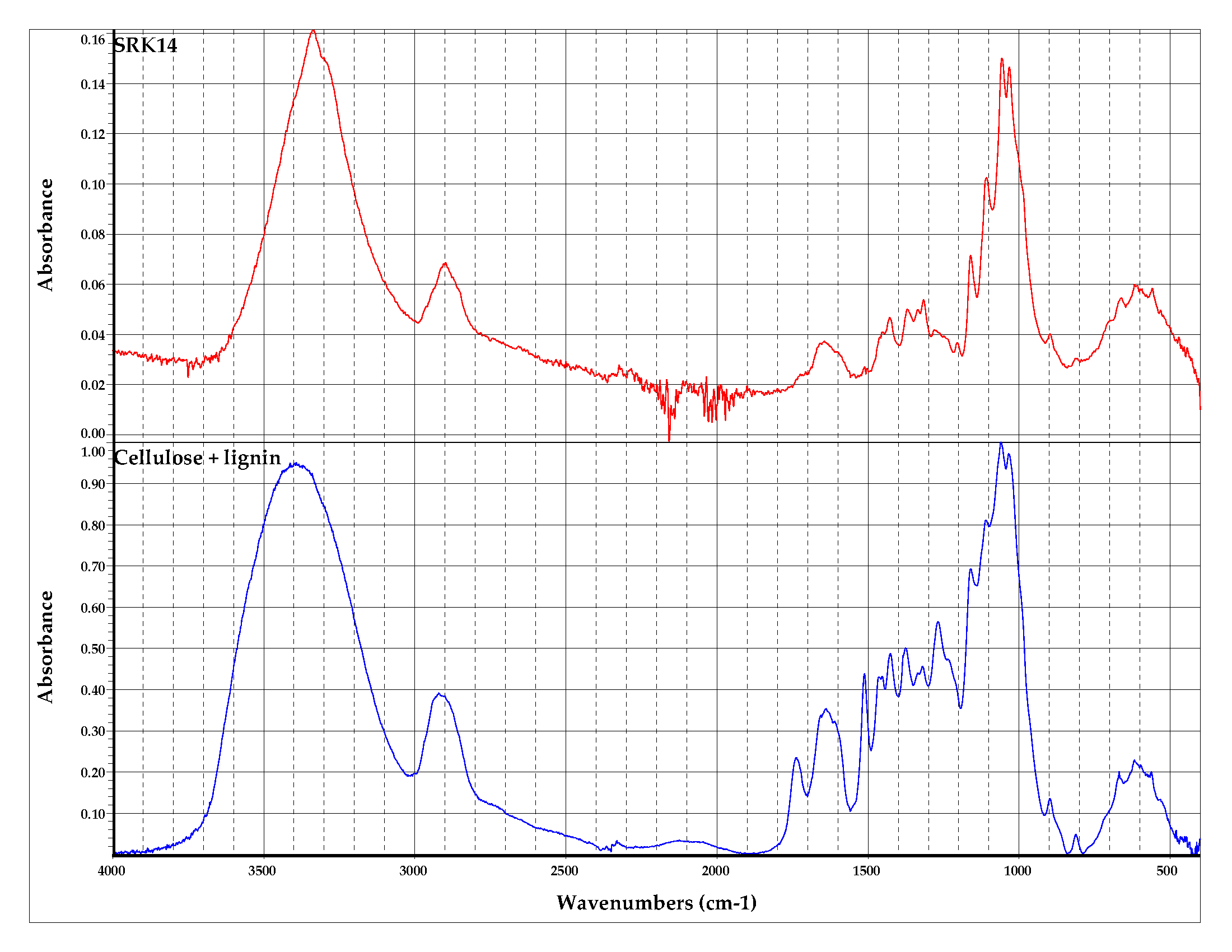
Material type: Disc consisting of cellulose.
Polymer: Cellulose (98%)
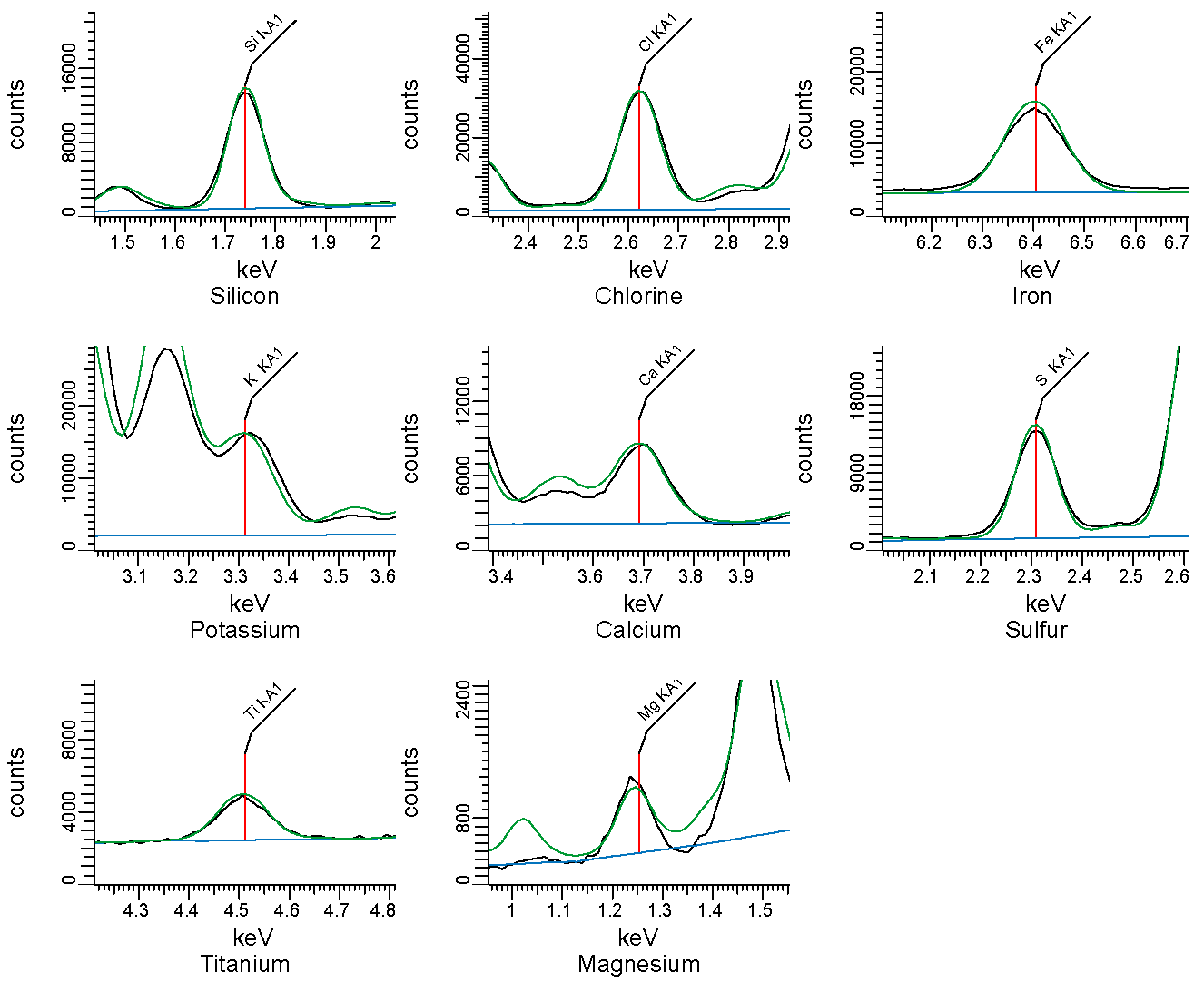
Additives (fire retardants, fillers or traces of inorganic elements): Silicon (1%), Chlorine (1%), traces of other elements (<1%)
| Compound | Mass Concentration (%) |
|---|---|
| Cellulose (-) | 98 |
| Silicon (Si) | 1 |
| Chlorine (Cl) | 1 |
| Traces of iron (Fe) | <1 |
| Traces of potassium (K) | <1 |
| Traces of sulfur (S) | <1 |
| Traces of calcium (Ca) | <1 |
| Traces of titanium (Ti) | <1 |
| Traces of magnesium (Mg) | <1 |
A. Material composition identification
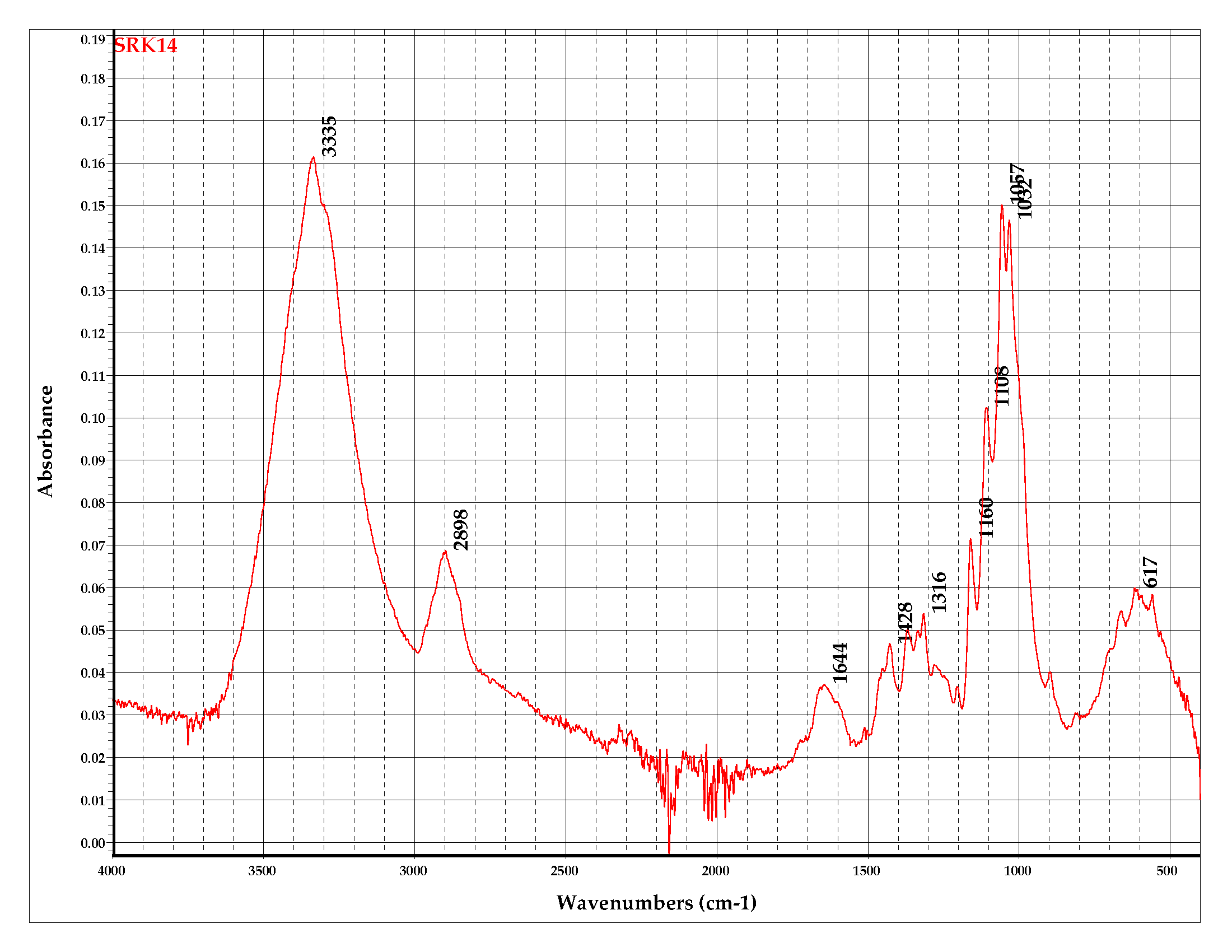
A.1 Attenuated total reflection – Fourier transform infrared spectroscopy (ATR-FTIR)
Table 2. FTIR compound identification.| Identified Compounds |
|---|
| Cellulose (-) |
A.2 Energy Dispersive X-Ray Fluorescence (EDXRF)
Table 2. Inorganic elements and their mass concentration identified with EDXRF.| Element | Mass Concentration (%) |
|---|---|
| Si | 1 |
| Cl | 1 |
| Fe | <1 |
| K | <1 |
| S | <1 |
| Ca | <1 |
| Ti | <1 |
| Mg | <1 |
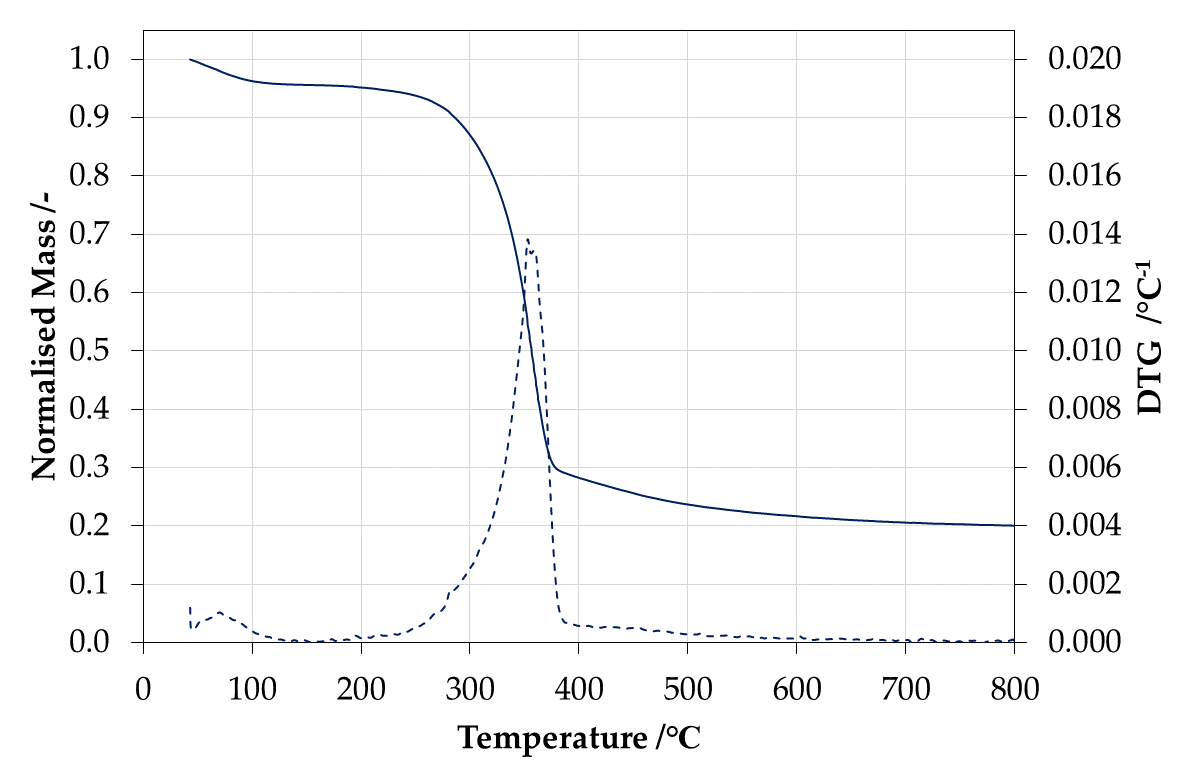
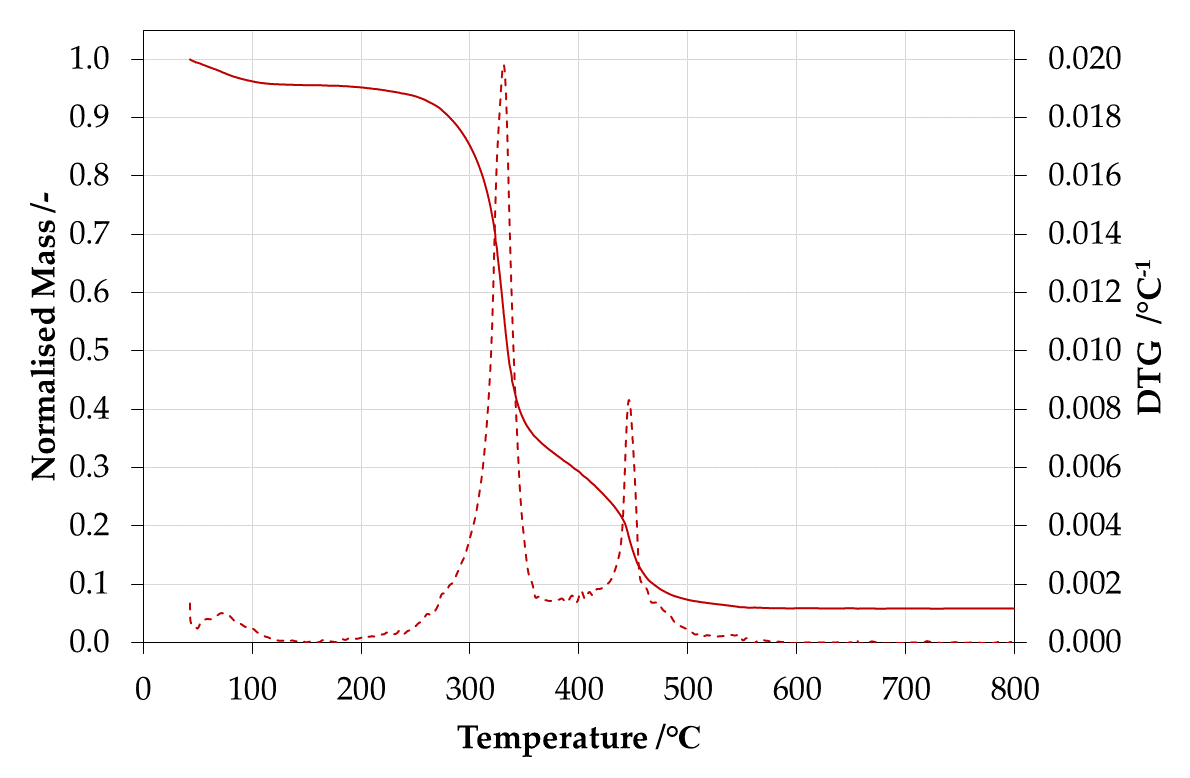
B. Thermogravimetric analysis
Table 3. Mass fraction of residue after thermal decomposition.| Condition | Fraction of mass residue at 800°C |
|---|---|
| Non-oxidative (nitrogen) | 0.20 |
| Oxidative (air) | 0.06 |
| Peak ID | Temperature peak (°C) | Amplitude of peak (°C-1) |
|---|---|---|
| Peak 1 | 353 | 1.383 x 10⁻² |
| Peak ID | Temperature peak (°C) | Amplitude of peak (°C-1) |
|---|---|---|
| Peak 1 | 331 | 1.982 x 10⁻² |
| Peak 2 | 446 | 8.32 x 10⁻³ |