
ACP27
Material description
Material ID: ACP27
Material type: Aluminium composite panel with a core consisting of polyethylene (PE) and an inorganic filler.
Polymer: Polyethylene (98%)
Additives (fire retardants, fillers or traces of inorganic elements): Titanium Oxide (2%), Calcium (1%), traces of other elements (<1%)
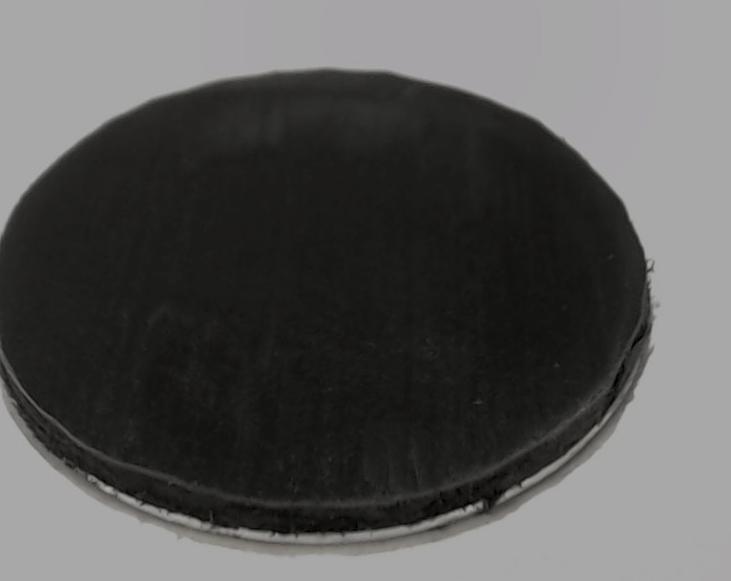
Table 1. Estimated mass concentration of compounds.
| Compound | Mass Concentration (%) |
|---|---|
| Polyethylene (PE) | 98 |
| Titanium Oxide (TiO2) | 2 |
| Calcium (Ca) | 1 |
| Traces of potassium (K) | <1 |
| Traces of silicon (Si) | <1 |
| Traces of phosphorus (P) | <1 |
| Traces of chlorine (Cl) | <1 |
A. Material composition identification
A.1 Attenuated total reflection – Fourier transform infrared spectroscopy (ATR-FTIR)
Table 2. FTIR compound identification.| Identified Compounds |
|---|
| Polyethylene (PE) |
| Titanium Oxide (TiO2) |
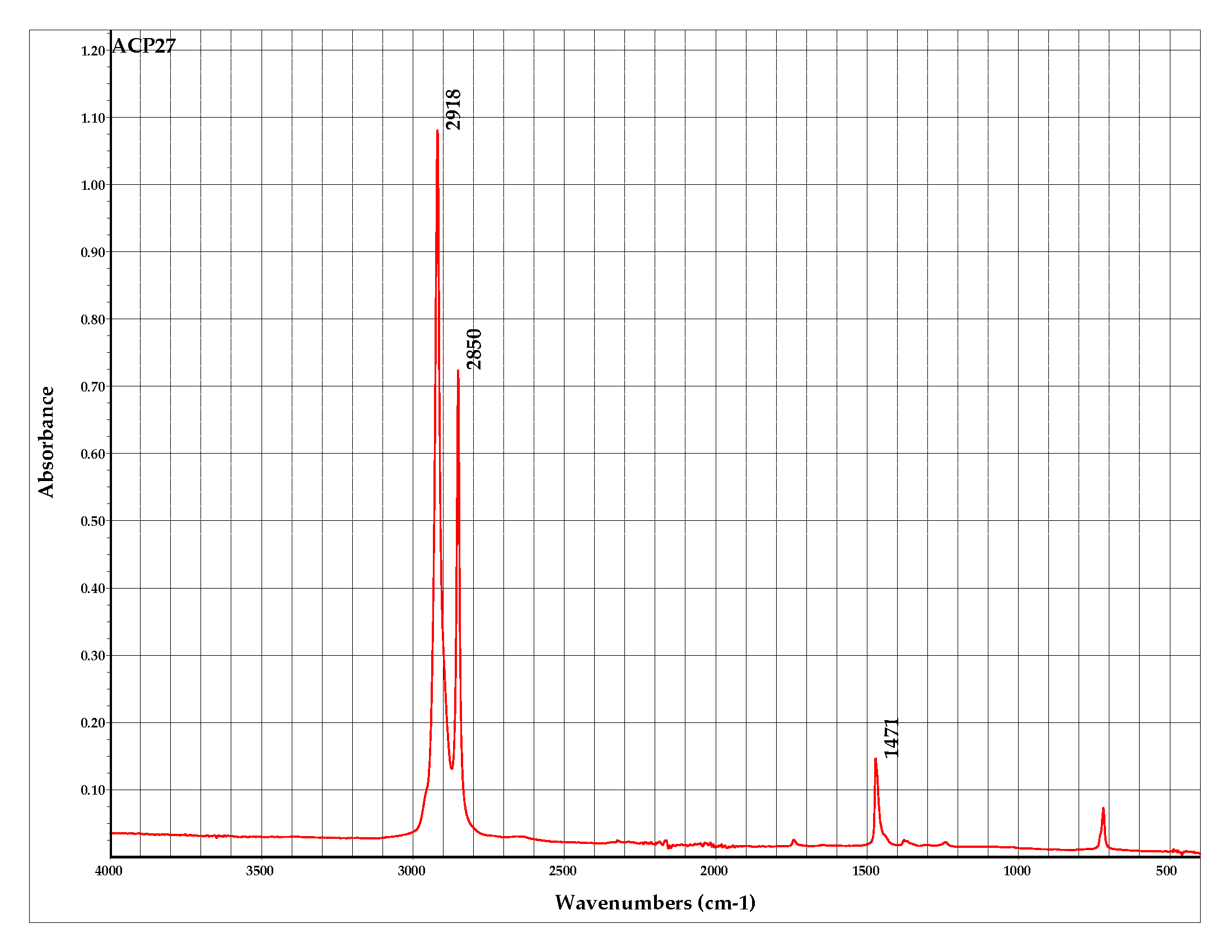
Figure 1 . FTIR spectra: Absorbance percentage versus wavenumber from the sample.
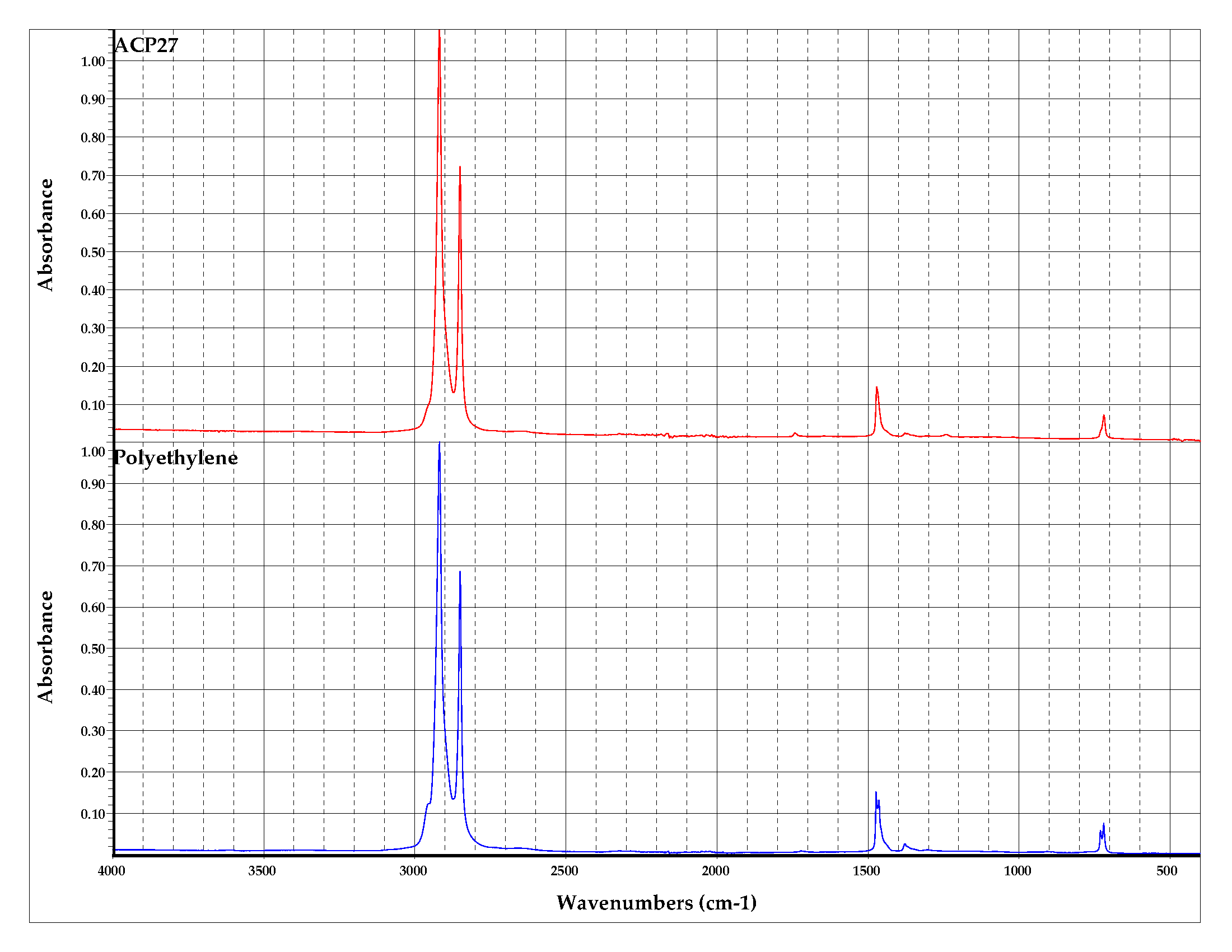
Figure 2. FTIR spectra: Absorbance percentage versus wavenumber from the sample and the identified compounds.
A.2 Energy Dispersive X-Ray Fluorescence (EDXRF)
Table 2. Inorganic elements and their mass concentration identified with EDXRF.
| Element | Mass Concentration (%) |
|---|---|
| Ti | 1 |
| Ca | 1 |
| Si | <1 |
| Fe | <1 |
| K | <1 |
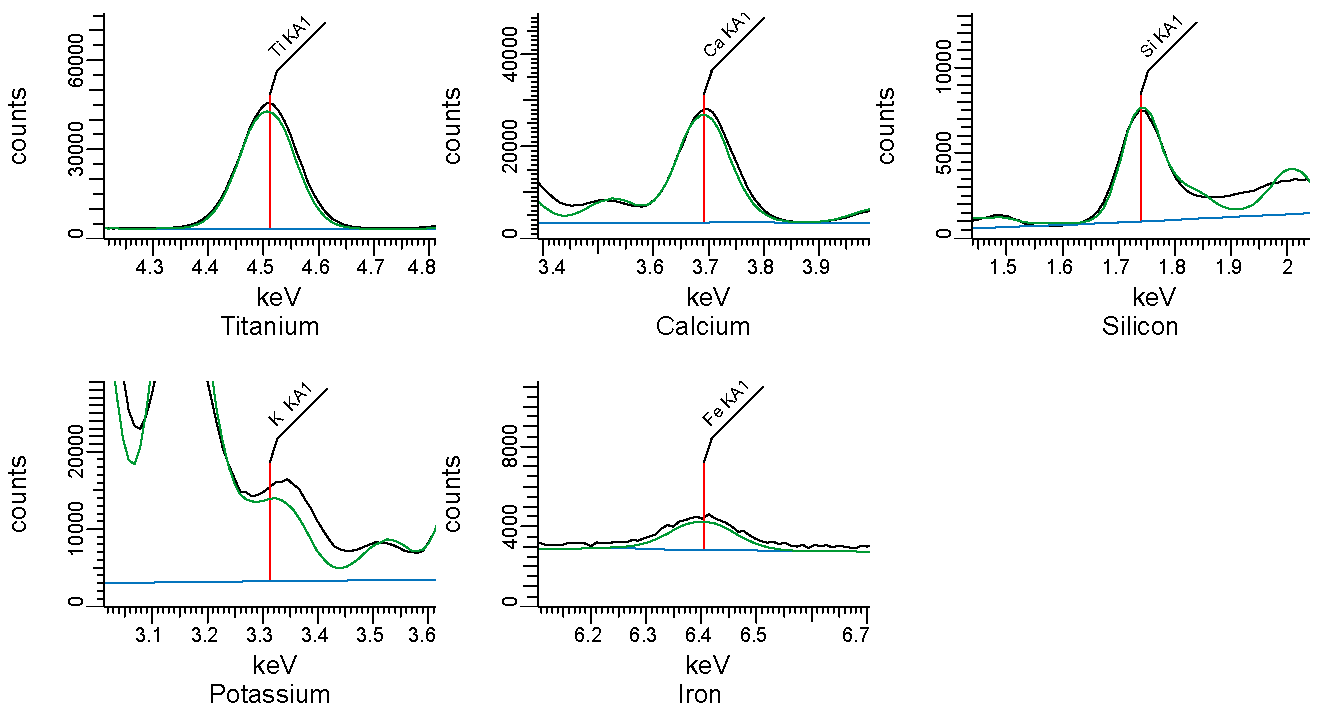
Figure 3. EDXRF spectra. Counts vs energy. Identified elements are shown as vertical lines.
B. Thermogravimetric analysis
Table 3. Mass fraction of residue after thermal decomposition.
| Condition | Fraction of mass residue at 800°C |
|---|---|
| Non-oxidative (nitrogen) | 0.02 |
| Oxidative (air) | 0 |
Table 4. Temperature and amplitude of main peaks in non-oxidative conditions.
| Peak ID | Temperature peak (°C) | Amplitude of peak (°C-1) |
|---|---|---|
| Peak 1 | 496 | 3.167 x 10⁻² |
Table 5. Temperature and amplitude of main peaks in oxidative conditions.
| Peak ID | Temperature peak (°C) | Amplitude of peak (°C-1) |
|---|---|---|
| Peak 1 | 412 | 9.96 x 10⁻³ |
| Peak 2 | 453 | 1.063 x 10⁻² |
| Peak 3 | 501 | 1.03 x 10⁻³ |
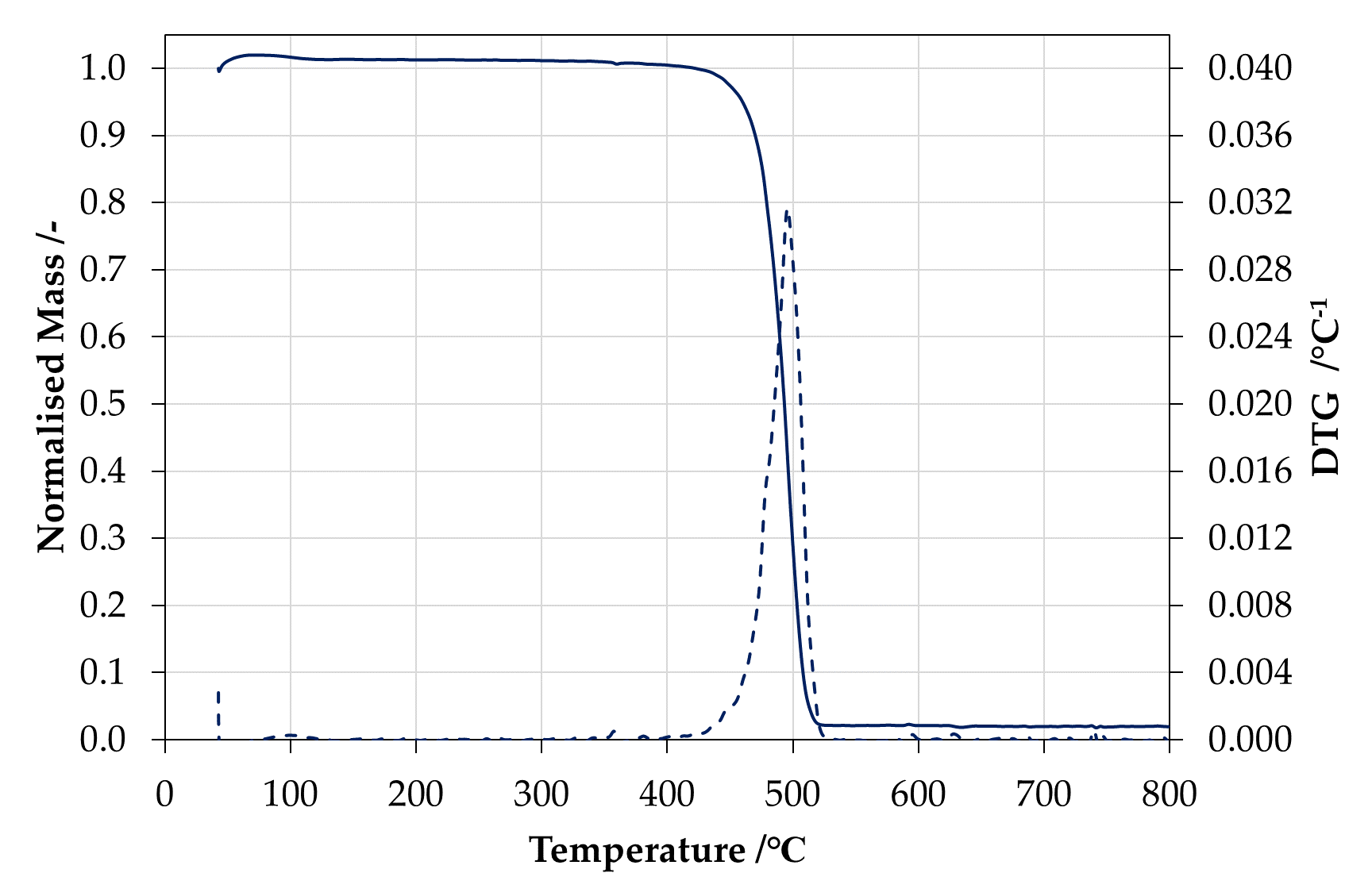
Figure 4. Normalised mass (solid line) and derivative of the normalised mass (dashed line) in 150 ml min-1 of nitrogen and a heating rate of 20°C min-1.

Figure 5. Normalised mass (solid line) and derivative of the normalised mass (dashed line) in 150 ml min-1 of air and a heating rate of 20°C min-1 .