
About the lecture
Zonal-based flexible bus service (ZBFBS) is a class of demand-responsive, door-to-door transit in which the service area is divided into zones and services operate via zonal routes with in-zone detours. Service requests are aggregated by zonal origin–destination (OD) pairs, time windows, and the number of passengers per request. This lecture addresses ZBFBS design using a stochastic programming approach that accounts for spatial (OD) and volume stochastic variations over time. Two types of two-stage stochastic problems with recourse are formulated: a frequency-based approach maximizing expected profit net of detour cost, and a schedule-based approach incorporating the time dimension. The approach is validated on instances from real data in Chengdu, China.
The research carries direct relevance to mega-events, particularly the Brisbane 2032 Olympic and Paralympic Games. Mega-events generate highly concentrated, temporally peaked, and spatially uneven travel demand across venues, accommodation, and transport interchanges—challenging conventional fixed-route transit. ZBFBS offers a responsive complement, dynamically matching door-to-door service to fluctuating demand within defined zones, well suited to dispersed venue geography and variable event schedules. By explicitly modelling demand uncertainty in space and time, the framework can inform contingency planning, fleet allocation, and zone configuration decisions robust under demand surges and disruptions typical of mega-event operations.
Australia already hosts flexible services providing a foundation, such as: NSW’s Moree On Demand and Sapphire Coast Flexibus; Victoria’s FlexiRide; Queensland’s Gold Coast On-Demand Transport. For Brisbane 2032, ZBFBS can build on this evidence to design zones around venues, accommodation, and transport hubs—offering transferable insights for planning accessible, efficient, and resilient mobility.
About the speaker
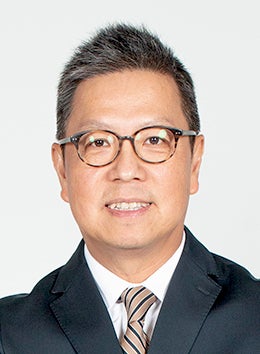
Professor Hong K. LO is Dean of Engineering, Chair Professor of Civil and Environmental Engineering and Director of GREAT Smart Cities Institute of the Hong Kong University of Science and Technology. His expertise includes smart city, dynamic transportation system modeling, traffic control, network reliability, and public transportation analysis. He was one of the Most Cited Researchers in Civil Engineering in the Academic Ranking of World Universities (ARWU). Moreover, Professor Lo was elected as Convener of the conference series Advanced Systems for Public Transportation (CASPT), serves as Founding Editor-in-Chief of Transportmetrica B: Transport Dynamics, Managing Editor of Journal of Intelligent Transportation Systems. Professor Lo was awarded the prestigious triennial World Conference on Transportation Research (WCTR) Prize, Eastern Asia Society for Transportation Studies (EASTS) Outstanding Paper Award, and School of Engineering Research Excellence Award. Prof Lo is appointed as a Justice of the Peace (JP) by the Hong Kong government, and is a Fellow of The Hong Kong Institution of Engineers (FHKIE), Fellow of the Chartered Institute of Logistics and Transport (FCILT), Fellow of the Hong Kong Institute of Highway and Transportation (FIHT), Fellow of the Hong Kong Society for Transportation Studies (FHKSTS), and elected as a Fellow of Hong Kong Academy of Engineering (FHKEng).